



Wisdom Teeth Removal in Oklahoma City
Why Should I Have My Wisdom Teeth Removed?
Wisdom teeth often cause problems because they can become impacted, meaning they don’t fully emerge or grow at an angle. This can lead to pain, infection, damage to adjacent teeth, and alignment issues. When wisdom teeth are not properly aligned, they can also lead to cysts or tumors, which can destroy the jawbone and affect other healthy teeth.
Contact us today to request an appointment with our caring, nurturing staff where your comfort and health comes first.
Oklahoma City Office Oklahoma City Office Request an AppointmentRole of an Oral Surgeon
Oral surgeons, such as Dr. Wooten, specialize in diagnosing and managing complex dental issues, including wisdom teeth removal. They have extensive training in anesthesia and surgical techniques, ensuring that the procedure is performed safely and with minimal discomfort. They are equipped to handle complications that might arise during surgery and to provide appropriate care.
The Removal Process
-
- Consultation and Evaluation: An oral surgeon will first conduct a thorough examination, often including X-rays, to assess the position of your wisdom teeth (if impacted or not) and determine if removal is necessary.
What is an impacted tooth?
Although most people develop and grow 32 permanent adult teeth, many times their jaws are too small to accommodate the four wisdom teeth. When inadequate space prevents the teeth from erupting they are called impacted wisdom teeth. This indicates their inability to erupt into the proper position for chewing and cleaning.
Types of Impactions:
We will need to see you for a consultation to determine if you will benefit from wisdom tooth removal. A special x-ray of your mouth and jaws (panorex) will be taken to determine if your wisdom teeth are impacted, if there is room for them to erupt, and how difficult it will be to have them removed.
-
- Soft Tissue Impaction: There is not enough room to allow the gum tissue to retract for adequate cleaning of the tooth.
- Partial Bony Impaction: There is enough space to allow the wisdom tooth to partially erupt. However, the tooth cannot function properly in the chewing process, and creates cleaning problems, among others.
- Complete Bony Impaction: There is NO space for the tooth to erupt. It remains embedded in the jaw bone or if even partially visible requires complex surgical techniques for removal.The impacted wisdom tooth may also be in an unusual position and difficult to remove. This situation can also arise when the shape or size of the jaw bone and other facial structures make removal of this tooth significantly more complex.
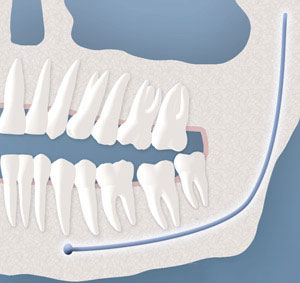 Soft Tissue
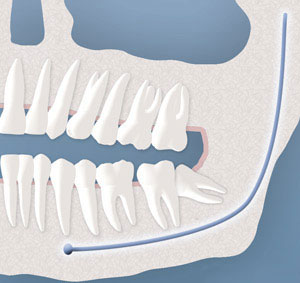 Partial Bony
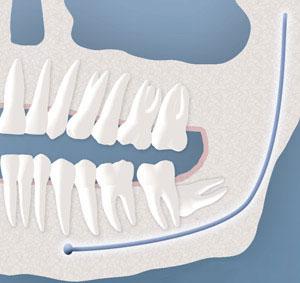 Complete Bony
- Anesthesia: Depending on the complexity of the extraction and patient preference, the procedure can be done under local anesthesia, sedation, or general anesthesia.
- Extraction: The surgeon will make an incision in the gum to access the tooth. In some cases, the tooth may need to be divided into smaller pieces for easier removal.
- Post-Operative Care: After extraction, the gums will be sutured, and you’ll bite down on gauze to manage bleeding. Post-operative instructions, pain medication, and follow-up appointments will be provided to ensure proper healing.
Why Choose an Oral Surgeon?
Oral surgeons are trained to handle all aspects of tooth extraction, including those with potential complications. Their expertise ensures that the procedure is done effectively, reducing risks and promoting faster recovery.
For personalized care and expertise in wisdom teeth removal, consulting with Dr. Wooten is the best choice to address any concerns and ensure a smooth process.
Our services are provided in an environment of optimum safety that utilizes modern monitoring equipment and staff who are experienced in anesthesia techniques.
Frequently Asked Questions About Wisdom Teeth Removal:
What if I don’t have my wisdom teeth removed as a teenager or young adult?
As wisdom teeth develop, the roots become longer and the jaw bone more dense. When it is necessary to remove impacted wisdom teeth in your thirties, forties or beyond, the post-operative course can be prolonged and there is a higher complication rate. Treating these complications is often more difficult and less predictable than with a younger patient. Healing may be slower and the chance of infection can be increased. If your impacted wisdom teeth are not removed in your teenage years or early in your twenties and they are completely impacted in bone, it may be advisable to wait until a localized problem (such as cyst formation or localized gum disease and bone loss) develops. In general, you will heal faster, more predictably and have fewer complications if treated in your teens or early twenties.
What happens on the day wisdom teeth are removed?
For wisdom teeth removal, sedation options will be discussed at your consultation. Our office ensures maximum comfort with various anesthesia types, modern monitoring, and experienced staff. On surgery day, bring a responsible adult to stay with you. The procedure lasts 30-60 minutes, with total office time around 90 minutes.
Do not eat or drink (except necessary medications) for at least 6 hours before surgery to avoid complications. If prescribed pain medication, fill it in advance. Sedation usually involves a quick IV placement in your arm, and local anesthesia ensures comfort post-surgery. Dissolvable stitches may be used, and gum swelling is normal.
Post-surgery, start with clear liquids and gradually eat more solid foods as tolerated. Avoid dairy on the day of surgery to prevent nausea. If taking antibiotics, note they may affect birth control efficacy.
What does wisdom tooth removal cost and is it covered by insurance?
The fee for your treatment is determined by a number of factors. These may include the difficulty involved in removing your teeth and which type of anesthesia is best for you. During your consultation appointment, the surgeon will need to review your x-rays, complete an examination and determine the best option for anesthesia, before an accurate estimate can be provided. Every insurance company has a different policy regarding the extent of coverage for a given surgical procedure. The oral surgeon’s office staff will help you obtain maximum insurance coverage for your treatment.
What if I have questions before surgery?
At the time of your consultation, your specific situation will be discussed in greater detail. We encourage you to ask any questions you may have. If new questions arise after your consultation, please call our office at Oral & Facial Surgery of Oklahoma Office Phone NumberOral & Facial Surgery of Oklahoma Office Phone Number 405-751-7600 to speak to one of our patient care coordinators